



As of today, an active and ongoing investigation is underway to identify the alleged Honolulu lawmaker accused of accepting $35,000 from a suspect connected to a federal corruption case. Hawaii Attorney General Anne Lopez states her office is working diligently to conclude the investigation as soon as possible. To give people a clear plan/date, Lopez provided a brief schedule but did not promise a deadline for the investigation.
Lopez said, “Everybody is anxious to hear an answer to that question, and I can’t yet provide you a definitive answer other than to say that SIPD (Special Investigations and Prosecution Division), and me, absolutely understand the impact of what this investigation has, and the importance of wrapping it up as quickly as possible.”
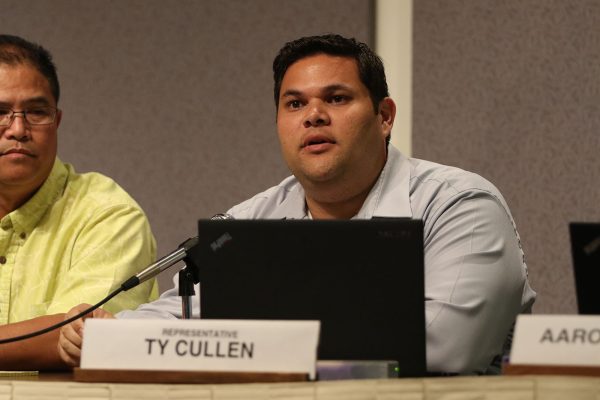
The current significant timelines so far are as follows: the candidate filing deadline in early June and the primary election in August. However, this situation isn’t uncommon. In the last four years, Sen. Kalani English and State Rep Ty. Cullen was caught taking bribes during a federal investigation, highlighting the corruption in Hawaii’s Senate and why citizens of Hawaii feel unsafe. Adding on, Cullen, during his arrest, allegedly recorded a meeting where the $35,000 was given to a different lawmaker.
Under Lopez’s statement, she will not make any disclosures about the identity of the individuals under investigation. Lopez says, “I can’t tell you anything about the identity of these persons,” and “I’m not going to answer it, and people just have to be patient.” Lopez’s reasoning is to emphasize her professionalism and the safety of the investigation.
In response to the recent upsurge of bribery, Sen. Karl Rhoades’s Senate Judiciary Committee is advancing the bribery legislation. Rhoades says, “But if I were running again, yes, absolutely. It should have been done six months ago.”
Specifically, Rhoades advanced the bill that would make a large class bribe a Class A felony, carrying a 20-year sentence. To give a new range that crosses this offense, Rhoades said, “If it aggregates to $50,000, it would still count as an A felony. It’s a very harsh penalty.”
On the contrary, the Office of the Public Defender opposed the enhancement of the law. Assistant Public Defender, Hayley Cheng, said, “We are extremely oppositional to the enhancement to a Class A. Class A felonies are reserved for the most serious offenses in our criminal justice system. A Class A felony is the equivalent of a manslaughter charge,” highlighting if the change is justified, given their position.
Currently, the status of the attorney general’s investigation is unknown, other than the initial 35,000-dollar payoff, which the federal investigators did not prosecute, but eventually did share their evidence with the attorney general. The federal investigators currently state that the money was given to an “influential lawmaker.”
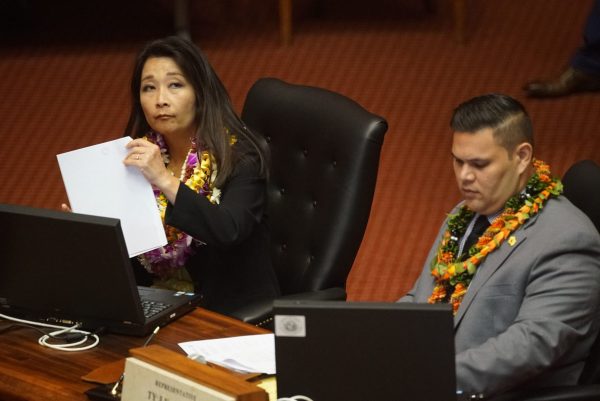
For the influential lawmaker, it is alleged that Sylvia Luke is being investigated. Lt. Gov. Sylvia Luke has said she accepted $10,000 in campaign contributions along with Cullen on the same day federal investigators stated someone received $35,000. It is important to note that donations are legal from a group of donors, making Sylvia Luke plausibly guilty-free.
Finally, Luke expects to finish the investigation soon, stating that if no criminal act is found by the investigators, she will release all evidence to the public to be transparent with the citizens of Hawaii. Currently, she will update the status every two weeks. But this begs the question whether Hawaii’s government is safe to trust and if Rhoades’ change is justified or not.