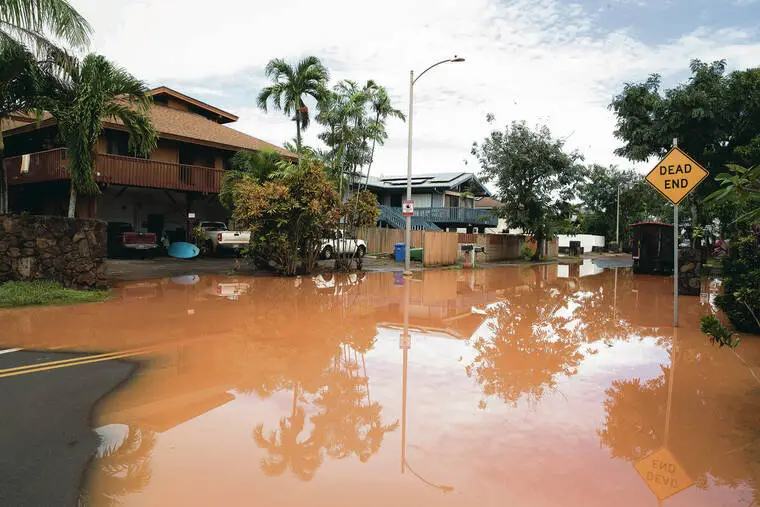













Hawaii experienced one of its most severe rainfalls on March 10-16, receiving lengths of rain up to 46 inches across all islands–breaking records not seen since the 1980s. The storm devastated many families, damaging 1,074 properties and rendering them inaccessible to families. Of those properties, 22 are considered destroyed and beyond repair.
As of today, available damage reports are most notably seen in these areas: Waialua, Hale’iwa, Central Oahu, Wai’nae Coast, ‘Ewa, Urban Honolulu, East Honolulu, Ko’olau Poko, and Ko’olau Poa.
Although families were left devastated by damage to their homes, Governor Josh Green seeks to aid those affected by the Kona Low. “After the recent Kona Low storms, our priority is making sure families who lost the use of their homes have a safe place to stay,” Governor Josh Green said. “We appreciate the close coordination with the city and North Shore lawmakers to quickly secure housing options and stabilize these households while recovery continues.”
For the affected citizens, the state has secured 80 rooms through April 30 at the Inn at Schofield Barracks for damaged households, and the city continues to add 50 additional housing units available while citizens try to rebuild.
Representative Sean Quinlan stated, “The state will use the Major Disaster Fund to cover the cost of hotel stays for residents whose homes were made uninhabitable by the recent storms. These placements are intended for households that cannot safely remain in their homes and need temporary lodging while cleaning and repairs are completed.” On this note, citizens affected by the storms that meet the criteria can call Aloha United Way at 211 for assistance.
While storms affected Hawaii residents, they were not the only challenges faced. Power outages happened across all of Oahu during the Kona Low storms, leaving some residents in the dark for a week at the worst.
Hawaiian Electric Company (HECO) worked during the devastating storms to restore power to some residents and facilities, showing their hardship and dedication to customers. HECO estimates 131,000 customers affected by the Kona Low storm, highlighting the devastation of damages hailing from the storm. As of March 20-23, HECO has restored power to all residents of Hawaii, one of the longest outages Hawaii has ever seen in history.
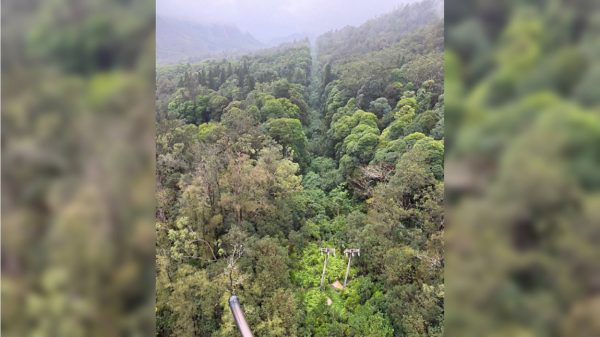
Residential areas were not only affected by the storms, but also school infrastructure and education were affected by the storms. The state Department of Education states that the Kona Low storm caused $171 million in damage to its public schools. The number was shared by DOE superintendent Keith Hayashi at the board of education meeting. Some damages include flooding and water intrusion, roof and ceiling damage, debris, water-clogged drainage systems, and access issues due to road closures.
Hayashi stated that Konawaena Middle and High Schools were hit among the hardest, making students switch from in-person classes to online classes, affecting their learning. “The water line was about four feet high. It kind of shows you, it gives you an idea of the magnitude and amount of water that came down at one time, and the force of the water,” Hayashi said during his board report. “I’ve never seen anything like it in my life in terms of the degree and the intensity of the damage at those schools.”

Although this storm was one of the most devastating storms ever seen in the history of Hawaii, it still showed residents aloha and support for their Aina during the disaster.
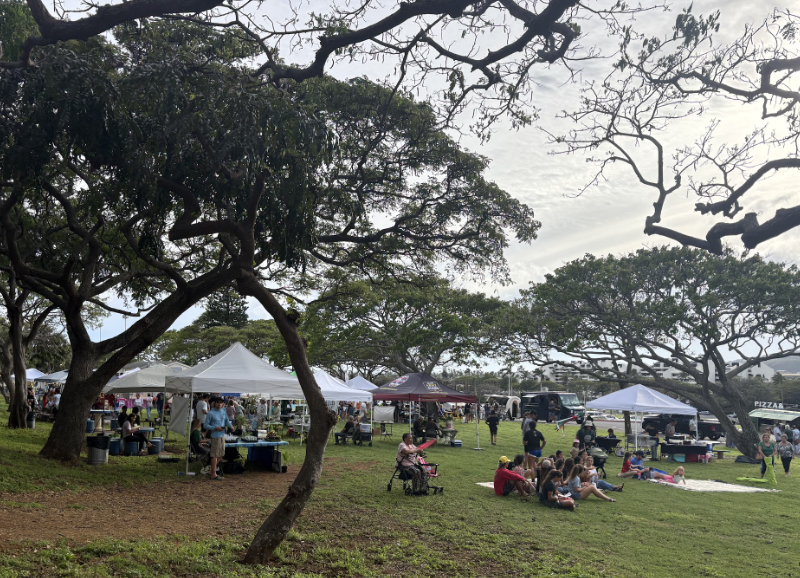
Some people helped house, feed, and support residents. Kalamaua Homesteaders Association set up a hub at Kiowea Park during the storm on March 22, 2026, to support residents with supplies and free hot meals. “We’re kind of looking more at the rebuilding portion of this,” said Lehua Kauka, head of the hub. “Hopefully we can get more donations for building supplies, wood, lumber, two-by-fours, drywall, even appliances. A lot of our community members here on Molokai lost appliances, their stoves, washer, dryers.”
Ultimately, the Kona Low storm totaled an outstanding amount of 1 billion dollars in damage and has affected Hawaii in many ways more than one but still shows Hawaii’s aloha and resilience.